
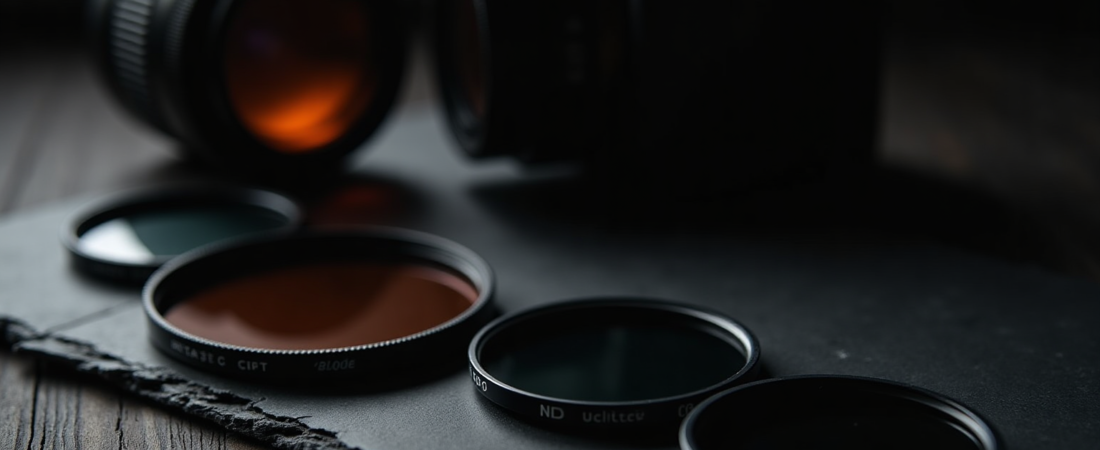
Best Camera Filters for Photography in 2026: ND, CPL, and UV Filters That Elevate Every Shot
Camera filters are one of the most misunderstood — and most powerful — tools in a photographer’s bag. While post-processing software continues to advance, there are effects that simply cannot be replicated in editing. A polarizing filter cutting through glare on water, a neutral density filter smoothing a waterfall into silk, or a UV filter shielding an expensive lens from scratches and haze — these are in-camera effects that make the difference between a good shot and a stunning one.
In this guide, we break down the best camera filters for photography in 2026, covering ND filters, circular polarizers, UV protectors, and creative filter systems. Whether you shoot landscapes, portraits, street, or architecture, there’s a filter here that will transform your work.
What Are Camera Filters and Why Do You Still Need Them?
Camera filters are glass or resin elements that attach to the front of your lens (or drop into a filter holder system) to modify light before it hits your sensor. In an era of powerful editing software, you might wonder: why not just fix it in post?
The answer is simple — some light modifications can only happen before the shutter fires.
- Circular Polarizing (CPL) filters reduce reflections and saturate colors in ways that no software can replicate. That deep blue sky? That reflection-free lake surface? That’s a CPL at work.
- Neutral Density (ND) filters block light evenly across the spectrum, allowing long exposures in daylight. That ethereal, misty waterfall? You need an ND filter for that — there’s no “blur water” slider in Lightroom that looks natural.
- UV filters serve double duty: they cut ultraviolet haze (relevant for film and some digital sensors) and, more importantly, they protect your front lens element from dust, scratches, and accidental impacts.
The right filter doesn’t just protect your gear — it unlocks creative possibilities that are impossible to achieve any other way.
How to Choose the Right Camera Filter
Before diving into our picks, here’s a quick decision framework:
| Filter Type | Best For | Key Benefit |
|————-|———-|————-|
| UV/Skylight | Everyday lens protection | Shields front element; minimal image impact |
| CPL (Circular Polarizer) | Landscapes, water, glass, skies | Cuts reflections; boosts contrast & color saturation |
| ND (Neutral Density) | Long exposures, video, wide apertures in daylight | Reduces light without color shift |
| Graduated ND | High-contrast landscapes (bright sky, dark land) | Balances exposure across the frame |
| Creative/Special Effects | Experimental, artistic photography | Adds flare, diffusion, color casts, or dreaminess |
Filter thread size matters. Check the diameter printed on your lens barrel (e.g., 58mm, 77mm, 82mm). Many photographers standardize on their largest thread size and use step-up rings for smaller lenses — this saves money and reduces the number of filters you need to carry.
Best UV Filters for Lens Protection
1. Hoya UX II UV Filter
The Hoya UX II is the workhorse UV filter that most photographers should own. It features Hoya’s advanced multi-coating that reduces ghosting and flare to near-zero levels, while its slim profile prevents vignetting on wide-angle lenses. At a price point that won’t make you hesitate to keep it on every lens you own, it’s the best balance of optical quality and value.
Why we like it: Multi-coated glass, slim frame, excellent light transmission (over 97%), and affordable enough to buy for every lens in your kit.
2. B+W 58mm UV Haze MRC Filter
Made in Germany by Schneider Kreuznach, the B+W UV Haze MRC is the gold standard for lens protection. Its MRC (Multi-Resistant Coating) is both anti-reflective and hydrophobic, meaning dust and moisture wipe off effortlessly. The brass mounting ring (on select models) is more durable than aluminum and resists cross-threading. If you’re putting a filter in front of a $2,000 lens, this is the one that earns that position.
Why we like it: Premium Schott glass, MRC coating, brass ring option, legendary German optical quality.
Best Circular Polarizing (CPL) Filters
3. Hoya HD Nano C-PL Filter
The Hoya HD Nano C-PL is our top CPL pick for most photographers. Its high-transmission polarizing film delivers approximately 25% more light transmission than standard CPLs, which means you lose less light while still getting the full polarization effect. The nano-coating is water and oil repellent — raindrops bead right off — and the hardened glass is rated four times more durable than standard optical glass. For landscapes, water reflections, and sky saturation, this is the CPL to beat in 2026.
Why we like it: High light transmission, nano-coating repels water and oil, hardened glass durability, excellent color rendition.
4. B+W 77mm Circular Polarizer MRC Filter
If you want the absolute best and don’t mind paying for it, the B+W circular polarizer delivers reference-grade polarization. The MRC coating virtually eliminates ghosting even when shooting into light sources, and the brass mount ensures the filter won’t get stuck on your lens. It produces rich, deep skies and eliminates reflections from water and glass with surgical precision. A favorite among landscape and architectural photographers worldwide.
Why we like it: Reference-grade polarization, MRC anti-reflective coating, brass mount, exceptional build quality.
Best Neutral Density (ND) Filters
5. Lee Filters 100mm ND Filter Set
For serious landscape and long-exposure photographers, the Lee 100mm filter system is the industry standard. This set typically includes 3-stop, 6-stop, and 10-stop ND filters in a modular holder system that works across all your lenses via adapter rings. The resin filters are optically flat, virtually free of color cast, and slot smoothly into the holder even with cold hands in pre-dawn conditions. If you’re committing to long-exposure photography, this is the system to build around.
Why we like it: Modular system, virtually no color cast, optically flat resin, works across multiple lens thread sizes, professional standard.
6. Tiffen 77mm Variable ND Filter
Not everyone needs a full square-filter system. The Tiffen Variable ND lets you dial in your density from roughly 2 to 8 stops by rotating the front element — one filter replaces multiple fixed NDs. It’s perfect for video shooters who need to adjust exposure on the fly, and for photographers who want a single, compact filter in their bag for occasional long exposures. At this price point, it’s one of the best values in filtration.
Why we like it: Variable density range, compact screw-in design, great for video and casual long exposures, affordable.
7. NiSi 100mm ND Filter Kit
NiSi has rapidly become the filter brand that serious photographers are switching to, and for good reason. Their 100mm ND filter kit offers optical glass (not resin) with nano-coating that’s both hydrophobic and oleophobic. The color neutrality is outstanding — reviewers consistently report virtually zero color cast even at 10 stops. The included aluminum filter holder is lightweight yet rigid, and the system is compatible with adapter rings from 67mm to 95mm. For photographers who want Lee-level quality at a more accessible price, NiSi is the answer in 2026.
Why we like it: Optical glass with nano-coating, exceptional color neutrality, lightweight aluminum holder, excellent value vs. Lee.
Best Graduated ND Filters
8. Lee Filters 100mm Hard Graduated ND Set
Graduated ND filters are the secret weapon of landscape photographers who shoot in challenging light. When the sky is three stops brighter than the foreground — a situation every sunrise and sunset photographer knows intimately — a graduated ND brings the dynamic range back into a single exposure. The Lee 100mm hard-edge grads (available in soft-edge versions too) are the gold standard. They slot into the same holder as the regular NDs, and you can position the transition line exactly where the horizon falls. No bracketing, no HDR ghosting artifacts — just a clean, balanced exposure.
Why we like it: Precise hard-edge transition, works with Lee holder system, available in multiple densities (0.3, 0.6, 0.9), professional standard.
Best Creative and Special Effects Filters
9. Moment 62mm CineBloom Diffusion Filter
Diffusion filters are having a massive moment (pun intended) in 2026, and the Moment CineBloom is leading the charge. Available in 1/4, 1/2, and 1 strengths, it wraps highlights in a soft, cinematic bloom while keeping shadows deep and contrasty — that signature “film look” that content creators and portrait photographers chase. It’s gorgeous for video, dreamy for portraits, and adds an organic softness that no amount of Gaussian blur in post can replicate. If you’re shooting anything creative, this filter belongs in your bag.
Why we like it: Cinematic diffusion effect, multiple strength options, gorgeous for portraits and video, organic look impossible to replicate in post.
10. K&F Concept 77mm Magnetic CPL + ND Filter Kit
K&F Concept’s magnetic filter system is one of the most innovative products of 2026. Instead of threading filters on and off (a slow, frustrating process when the light is changing fast), these filters snap magnetically onto a base ring that stays on your lens. Swap from CPL to ND to UV in under a second — no cross-threading, no fumbling with gloves, no missed shots. The kit includes a CPL, a variable ND, and a UV filter, all with multi-coated optical glass and slim aluminum frames. For travel and run-and-gun shooters, this system is a game-changer.
Why we like it: Magnetic quick-swap system, includes CPL + Variable ND + UV, multi-coated optical glass, incredibly fast filter changes, perfect for fast-paced shooting.
Filter Buying Guide: What to Know Before You Purchase
Thread Size and Step-Up Rings
Every filter-thread lens has a diameter marked on the front (look for the ⌀ symbol followed by a number in mm). The most common sizes are 52mm, 58mm, 67mm, 72mm, 77mm, and 82mm.
Pro tip: Buy filters in your largest thread size and use step-up rings for smaller lenses. A 77mm CPL with a set of step-up rings covers every lens in your kit — and saves you hundreds of dollars versus buying individual filters for each lens.
Coating Quality Matters
Cheap, uncoated filters degrade image quality with flare, ghosting, and reduced contrast. Look for:
- Single-coated: Budget-friendly, basic flare reduction
- Multi-coated (MC/MRC): The sweet spot for most photographers
- Nano-coated: Premium; repels water, oil, and dust; easiest to clean
Color Cast and Neutrality
Poor ND filters shift your image toward magenta, green, or blue. Always check reviews for color cast — it’s the single biggest quality differentiator between cheap and premium ND filters. Lee, NiSi, and B+W consistently score highest for color neutrality.
Slim vs. Standard Frames
If you shoot with wide-angle lenses (24mm or wider on full-frame), choose slim-frame filters. Standard frames can cause vignetting (dark corners) on wide lenses. Most modern premium filters are slim by default.
How to Use Camera Filters Effectively
Using a CPL Filter
Using an ND Filter
Using a Graduated ND Filter
Common Mistakes to Avoid
Frequently Asked Questions
Do UV filters affect image quality?
High-quality, multi-coated UV filters have minimal impact on image quality. You might lose 1% of sharpness in extreme conditions. The protection benefit — preventing scratches and impact damage to your front element — far outweighs this negligible cost. Budget UV filters, however, can cause noticeable flare and reduced contrast.
Can I use a CPL filter for video?
Absolutely. CPLs are widely used in video production to manage reflections on water, glass, and wet surfaces. They also deepen sky color. The one consideration: if you’re panning across a scene, the polarization effect will shift as the camera angle changes relative to the light source. Plan your shots accordingly.
What ND filter strength do I need?
It depends on the effect you want and the ambient light:
- 3-stop ND (ND8): Moderate blur in overcast conditions; wider apertures in bright light for portraits
- 6-stop ND (ND64): Good for golden hour long exposures; silky waterfalls in shade
- 10-stop ND (ND1000): Daylight long exposures; turning clouds into streaks; extreme water smoothing
- Variable ND: Versatile option covering 2–8 stops; ideal for video and general use
Are square filter systems worth it?
If you shoot landscapes regularly, yes. Square filter systems (like Lee 100mm or NiSi 100mm) let you use graduated NDs, stack filters without vignetting, and use the same filters across all your lenses. For occasional use, screw-in filters are simpler and more portable.
How do I clean camera filters?
Use a microfiber cloth and lens cleaning solution. For stubborn smudges, breathe on the filter surface and wipe in a circular motion from center to edge. For nano-coated filters, most residue wipes off with a dry cloth — that’s the beauty of the coating.
Final Thoughts
Camera filters remain one of the most cost-effective ways to elevate your photography. A single CPL can transform your landscape shots. One ND filter can unlock long-exposure creativity you simply cannot achieve in post. And a quality UV filter on every lens gives you peace of mind that your glass is protected.
In 2026, the best filters offer nano-coatings, magnetic mounting systems, and optical glass that preserves every bit of your lens’s resolving power. Whether you’re just starting out with a protection filter or building a full landscape filtration system, the picks above represent the best options available today.
Start with a quality CPL and a UV filter for your most-used lens. Add NDs as your long-exposure work grows. Build from there. Your photos will thank you.
Disclosure: Lens & Lumens is a participant in the Amazon Services LLC Associates Program. Product links above are Amazon affiliate links — we earn a commission on qualifying purchases at no extra cost to you. We only recommend products we genuinely believe in.