
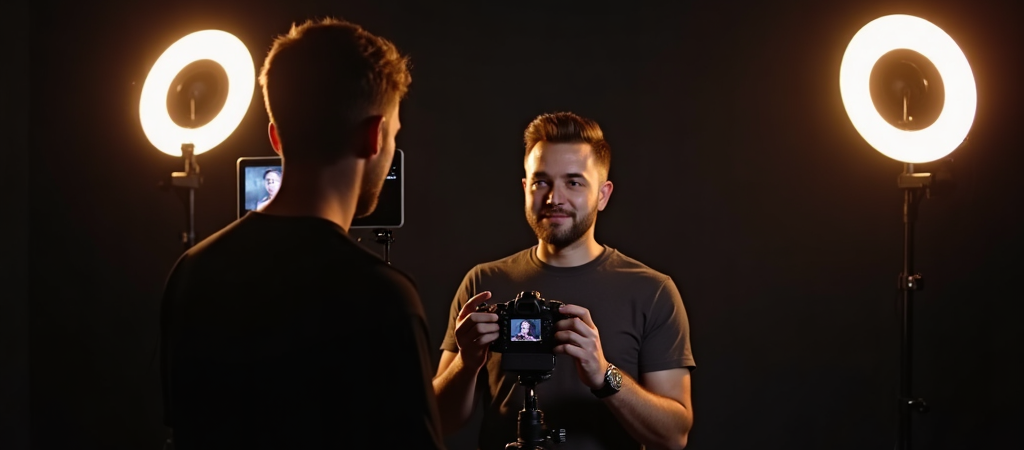
YouTube changed the rules again. Vertical shorts, horizontal long-form, livestreaming, and podcasts—all from the same channel, all demanding different things from your camera. The good news: 2026’s vlogging cameras handle all of it better than ever. The bad news: choosing the wrong one means fighting your gear instead of creating.
We tested eight cameras across real YouTube workflows—talking head, walk-and-talk, product review, and travel vlog—to find which ones actually make creating easier. Here’s what works.
What a Vlogging Camera Needs
Flip screen. Decent audio without an external mic. Fast autofocus that sticks to your face. Image stabilization that smooths out walking footage. And battery life that lasts through a full shoot day. Miss any one of these and vlogging becomes a chore instead of a creative outlet.
Best Overall: Sony ZV-E10 II
We recommended the original ZV-E10 for years. The Mark II fixes every complaint—better sensor, better autofocus, better video—and keeps the price under $900. If you’re starting a YouTube channel in 2026, this is the camera.
Why Content Creators Love It
- 26MP APS-C sensor — sharp 4K 60fps video with no crop
- AI autofocus — face tracking that doesn’t lose you, even when you turn away
- Built-in 3-capsule mic — clear dialogue audio without buying a separate microphone
- Product showcase mode — tap to shift focus from face to product and back, perfect for reviews
- Background defocus button — cinematic shallow depth of field at the press of a button
- USB-C power delivery — run forever with a power bank
At $899 body-only or $999 with the 16-50mm kit lens, nothing comes close for the price. Pair it with a Sigma 18-50mm f/2.8 and a Rode VideoMic Go II and you’ve got a complete YouTube setup for under $1,300. Check Sony ZV-E10 II on Amazon →
Best Premium: Sony FX30
The FX30 is what happens when Sony takes their cinema camera tech and packages it for YouTubers. It’s technically a cinema camera—XLR audio input, Cinetone color, S-Log3 for color grading—but it’s also the best-looking straight-out-of-camera YouTube content you can produce.
Cinema Quality for YouTube
- 20.1MP APS-C sensor — cinema-grade dynamic range in a compact body
- 4K 120fps — buttery slow motion for B-roll
- Dual Base ISO — clean footage in low light without noise reduction
- XLR audio — professional audio input via the optional handle
- Cine style menus — designed for video shooters, not stills photographers
- $1,798 body-only — cinema camera pricing that YouTubers can justify
If your YouTube revenue covers the investment—or if you want your content to look noticeably better than everyone else’s—the FX30 delivers. Check Sony FX30 on Amazon →
Best Budget: Canon EOS R50
The same Canon R50 we recommended for beginners is also the best budget vlogging camera. At $699 with a kit lens, it produces clean 4K, has reliable face-detection AF, and Canon’s menu system is the easiest to learn. The catch: 4K has a 1.5x crop, and battery life is mediocre. For bedroom and studio vloggers, neither matters.
Best for Travel Vlogging: DJI Osmo Pocket 3
The Osmo Pocket 3 isn’t a traditional camera—it’s a pocket-sized gimbal camera with a 1-inch sensor that produces shockingly good footage. The 3-axis gimbal makes walking footage look like it was shot on a $500 stabilizer. The flip screen faces forward for vlogging. And it fits in your jeans pocket.
Pocket-Sized Professional
- 1-inch CMOS sensor — larger than any phone, better low light than action cameras
- 3-axis gimbal — smooth footage without any stabilization software
- 2-inch rotatable touchscreen — flips for selfie, rotates for low angles
- Built-in Wi-Fi + Bluetooth — stream directly or control from your phone
- ActiveTrack 6.0 — the subject follows you automatically while you move
- $349 — the cheapest way to get gimbal-stabilized vlog footage
For travel vloggers who prioritize portability over everything, the Osmo Pocket 3 is the answer. Check DJI Osmo Pocket 3 on Amazon →
Best iPhone for Vlogging: iPhone 16 Pro
Say what you want about phone cameras—the iPhone 16 Pro produces YouTube-ready footage that requires zero color grading. Cinematic mode renders real bokeh. Action mode stabilization rivals mechanical gimbals. And the 48MP main sensor captures enough detail for 4K output. For many creators, the best vlogging camera is the one already in their pocket.
The limitation: audio. Apple’s built-in mics are fine for face-to-camera, but for professional-sounding dialogue, add a Rode Wireless Pro ($299) and your iPhone footage becomes indistinguishable from a dedicated camera in most viewing conditions.
Vlogging Camera Comparison
| Camera | Price | Video | Best For |
|---|---|---|---|
| Sony ZV-E10 II | $899 | 4K 60fps | Best overall YouTube camera |
| Sony FX30 | $1,798 | 4K 120fps | Cinema-quality YouTube |
| Canon R50 | $699 | 4K 30fps (cropped) | Budget studio vlogging |
| DJI Osmo Pocket 3 | $349 | 4K 60fps | Travel and walk-and-talk |
| iPhone 16 Pro | $999+ | 4K 60fps | Always-with-you content |
Essential Vlogging Accessories
A camera alone doesn’t make a YouTube channel. Budget for these essentials:
- Memory card — Samsung PRO Plus 256GB ($30) — fast enough for 4K, reliable enough to trust
- External mic — Rode VideoMic Go II ($99) — instant audio upgrade
- Tripod — Joby GorillaPod 5K ($75) — wraps around anything, works as a handle
- Light — Elgato Key Light Mini ($80) — USB-powered, clamp anywhere, looks professional
Frequently Asked Questions
Do I need 4K for YouTube?
Yes, in 2026. YouTube’s compression makes 1080p look noticeably softer on modern screens. 4K gives you editing flexibility (crop, stabilize, zoom) and your content looks crisp on TVs, tablets, and phones. Shoot 4K even if you export at 1080p.
Can I vlog with my phone?
Absolutely, and many successful YouTubers do. The iPhone 16 Pro and Samsung Galaxy S24 Ultra produce excellent video. The gap between phone and dedicated camera shows in low light, background blur, and audio quality. Add a wireless mic and good lighting and the gap shrinks dramatically.
What about the GoPro for vlogging?
GoPros produce great action footage but mediocre talking-head video. The ultra-wide lens distorts faces at arm’s length, audio is adequate but not great, and the small sensor shows noise in anything less than bright daylight. For action B-roll, GoPro excels. As a primary vlogging camera, look elsewhere.