
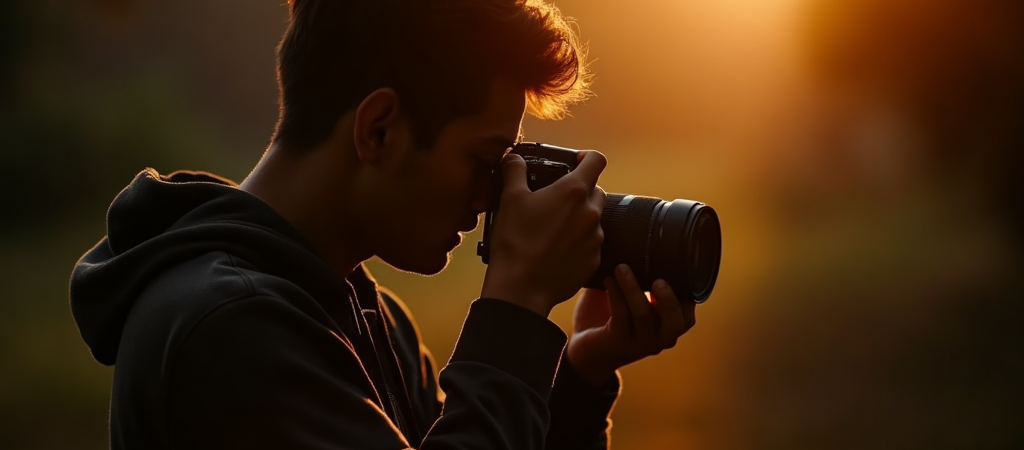
Every photographer remembers their first real camera. The moment you move past your phone and feel a real shutter click—something changes. You start seeing light differently. You start caring about composition, not just content. But buying your first camera is overwhelming. The specs read like alien language. The prices swing from $300 to $3,000 for things that look identical. And everyone online has a different opinion.
We cut through the noise. These are the best beginner cameras in 2026, chosen for image quality, ease of use, and room to grow. No gear snobbery, no unnecessary upgrades—just honest recommendations for people starting their photography journey.
How to Choose Your First Camera
Before the picks, understand the three decisions that actually matter:
- Mirrorless vs DSLR — Mirrorless is the future. Lighter, faster autofocus, better video, and every new lens release is mirrorless. DSLRs still work fine, but manufacturers have stopped developing them.
- Sensor size — Full frame gives you the best low-light and depth of field. APS-C is smaller, cheaper, and more than good enough for most beginners. Micro four-thirds is the budget pick with the most lens options.
- Ecosystem — You’re not buying a camera, you’re buying into a lens system. Sony E-mount has the most lenses. Canon RF is growing fast. Nikon Z has fewer budget options but excellent quality. Choose wisely—switching later is expensive.
Best Overall Beginner Camera: Sony a6700
The Sony a6700 is what happens when a camera company takes everything they’ve learned from their pro bodies and puts it in an affordable package. The autofocus is borrowed from the $3,500 a9 III—it tracks eyes, faces, and birds with a precision that makes beginners look like they’ve been shooting for years. Real-time tracking means you point, the camera follows. No skill required.
Why It’s Perfect for Beginners
- AI autofocus — identifies subjects and locks on automatically, even in tricky situations
- APS-C sensor — smaller than full frame but produces images that rival cameras costing twice as much
- E-mount ecosystem — over 80 Sony lenses and hundreds of third-party options from Sigma, Tamron, and Samyang
- 4K 120fps video — when you inevitably want to try video, this camera is ready
- Flip-out touchscreen — vlogging, selfies, and low-angle shots made easy
- Battery life — 570 shots per charge, excellent for APS-C
At $1,398 body-only, it’s not the cheapest beginner camera. But it’s the one you won’t outgrow in six months. Buy it with the Sony 18-135mm kit lens and you’ve got a travel, street, and portrait setup that lasts years. Check Sony a6700 on Amazon →
Best Budget Beginner Camera: Canon EOS R50
The Canon R50 exists for one reason: to give beginners an entry point that doesn’t suck. At $699 with a kit lens, it’s the cheapest mirrorless camera from a major manufacturer that produces genuinely good images. The 24MP APS-C sensor is sharp, the autofocus is fast enough for most situations, and Canon’s menu system is the most beginner-friendly we’ve used.
The Easy Entry Point
- 24.2MP APS-C sensor — crisp images with good dynamic range
- Subject tracking AF — people, animals, and vehicles detected and tracked
- Lightweight body — 375g, one of the lightest mirrorless cameras made
- 4K 30fps video — solid for YouTube and social media
- Canon ecosystem — growing RF-S lens lineup with affordable options
- $699 with 18-45mm kit lens — the lowest real-camera entry price
The R50’s limitations are real: small buffer for continuous shooting, no weather sealing, and limited third-party lens options. But for someone picking up a real camera for the first time, it removes every barrier that matters. Check Canon R50 on Amazon →
Best for Learning Photography: Fujifilm X-T30 II
Fujifilm cameras make you want to pick them up. The physical dials for shutter speed, ISO, and exposure compensation teach you photography the way it was meant to be learned—with your hands, not menus. The X-T30 II pairs that tactile experience with Fujifilm’s legendary film simulations, which produce JPEGs so good you might never shoot RAW.
The Teacher’s Camera
- Dedicated exposure dials — see your settings at a glance, learn exposure intuitively
- Film simulations — Velvia, Provia, Classic Chrome—JPEGs that look finished straight from camera
- 26.1MP X-Trans sensor — unique color science that photographers love
- Compact body — 383g, fits in a jacket pocket with the right lens
- X-mount lenses — some of the best APS-C lenses made, period
The autofocus isn’t as sophisticated as Sony’s, and video capability lags behind Canon and Sony. But if you want to fall in love with photography—actually enjoy the process of learning—Fujifilm makes that easier than any other system. Check Fujifilm X-T30 II on Amazon →
Best Beginner Full Frame: Nikon Z5 II
Full-frame cameras used to start at $2,000. The Nikon Z5 II changed that. At $1,599 with a kit lens, you get a 24MP full-frame sensor with dual card slots, weather sealing, and Nikon’s excellent ergonomics. It’s the cheapest entry into full-frame photography that doesn’t compromise on the fundamentals.
Full Frame Without the Price
- 24.3MP full-frame sensor — real full-frame depth of field and low-light performance
- Dual card slots — backup your shots, a feature usually reserved for $3,000+ cameras
- In-body stabilization (IBIS) — shoot handheld at slower shutter speeds without blur
- Weather sealed — shoot in rain and dust without worry
- Excellent ergonomics — comfortable grip, intuitive controls, logical menu system
- $1,599 with 24-50mm kit lens — cheapest full-frame entry from a major brand
The Z5 II’s autofocus isn’t as sophisticated as Sony’s, and 4.5fps continuous shooting limits sports and wildlife. But for portraits, landscapes, street, and everyday photography, full-frame image quality at this price is a game-changer. Check Nikon Z5 II on Amazon →
Best for Vlogging Beginners: Sony ZV-E10 II
If you know your photography will include video—and in 2026, it probably will—the ZV-E10 II is the most versatile starter camera you can buy. Built specifically for content creators, it has a directional microphone, a vari-angle screen that faces forward, and Sony’s legendary autofocus that never loses your face.
The Content Creator’s First Camera
- 26MP APS-C sensor — excellent stills and 4K 60fps video
- Built-in directional mic — clear audio without buying an external microphone
- Product showcase mode — shifts focus from face to product and back instantly
- Background defocus button — cinematic bokeh at the touch of a button
- E-mount ecosystem — same lenses as the a6700 and every other Sony APS-C camera
- $899 body-only — affordable entry to the best content creation system
The ZV-E10 II lacks an electronic viewfinder, which matters for outdoor shooting in bright sunlight. But for anyone creating content for YouTube, TikTok, or Instagram, it’s the camera that removes every excuse not to start. Check Sony ZV-E10 II on Amazon →
Best Budget Action Camera: GoPro HERO13 Black
Not every beginner wants to shoot from eye level. If your photography involves mountains, oceans, bikes, or anything that moves fast, the HERO13 Black is your starting point. Waterproof to 33ft without a housing, shockproof, and producing 27MP stills from a camera that fits in your palm.
Action Without Compromise
- 27MP stills + 5.3K60 video — sharp photos and smooth video from the same tiny camera
- Waterproof to 33ft — no housing needed for swimming, snorkeling, rain
- HyperSmooth 6.0 — stabilization so good you don’t need a gimbal
- GPS + barometer — auto-logs speed, elevation, and distance
- $349 — adventure photography that doesn’t break the bank
GoPro’s still photography won’t match a mirrorless camera—small sensor physics still apply. But for adventure, travel, and action that would destroy a regular camera, nothing beats the HERO13 at this price. Check GoPro HERO13 on Amazon →
Beginner Camera Comparison
| Camera | Price | Sensor | Best For |
|---|---|---|---|
| Sony a6700 | $1,398 | APS-C 26MP | Best overall, won’t outgrow |
| Canon R50 | $699 | APS-C 24MP | Cheapest real start |
| Fujifilm X-T30 II | $899 | APS-C 26MP | Learning photography |
| Nikon Z5 II | $1,599 | Full-frame 24MP | Full-frame on a budget |
| Sony ZV-E10 II | $899 | APS-C 26MP | Photo + video content |
| GoPro HERO13 | $349 | 1/1.9″ 27MP | Adventure and action |
Don’t Forget the Memory Card
None of these cameras come with a memory card. Buy a Samsung PRO Plus 256GB SD card ($30) or a SanDisk Extreme 128GB ($20) and format it in-camera before your first shoot. Cheap cards cause buffer slowdowns, corrupted files, and lost photos—don’t risk it.
Frequently Asked Questions
Should a beginner buy used?
Yes, with caveats. Used cameras from MPB, KEH, and B&H’s used department come with warranties and return policies. The Sony a6400, Canon R10, and Fujifilm X-T30 (original) are all excellent used buys. Just avoid eBay listings without return policies.
Do I need full frame as a beginner?
No. APS-C cameras produce images indistinguishable from full frame in most situations. Full frame matters for very low light, very shallow depth of field, and very large prints. Start with APS-C, learn the craft, and upgrade when you hit actual limitations—not imagined ones.
What lens should I buy first?
The kit lens that comes with your camera. Seriously. Modern 18-55mm and 18-135mm kit lenses are better than their reputation suggests. Shoot with it for three months, figure out what focal lengths you gravitate toward, then buy a prime lens in that range. The 50mm f/1.8 (or equivalent) from any manufacturer is the classic second lens.
Camera vs phone—when does a camera matter?
When you care about: low-light performance, background blur (real bokeh, not computational), fast-moving subjects, prints larger than 8×10, and having full control over your images. A phone is the best camera you always have with you. A real camera is what you reach for when the photo matters.