
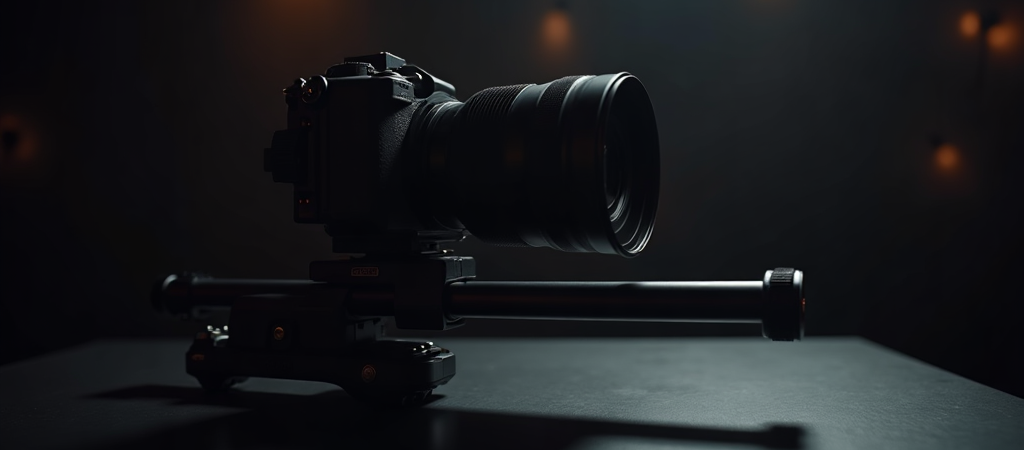
If you’ve ever watched a cinematic video and wondered how the camera glides so effortlessly across a scene — that’s not magic. That’s a camera slider in action.
Camera sliders are one of the most accessible tools for adding professional, buttery-smooth motion to your video work. Whether you’re shooting a product showcase, a wedding highlight reel, a short film, or YouTube content, a slider can instantly elevate your footage from static to cinematic.
In this guide, we’re breaking down the best camera sliders for cinematic video in 2026 — from compact travel sliders to motorized beasts that handle time-lapse and programmable moves. We’ll cover what matters, what doesn’t, and which slider deserves a spot in your kit.
What Is a Camera Slider (And Why You Need One)
A camera slider is a rail-based device that lets your camera move horizontally (or diagonally, or vertically) along a smooth track. The result? Controlled, repeatable, professional-looking camera movement — without the bulk of a dolly system or the setup time of a jib.
Here’s why sliders matter:
- They add depth and parallax — even a subtle 2-foot slide creates a sense of dimension that static shots simply can’t replicate.
- They’re budget-friendly — compared to gimbals, jibs, or full dolly systems, sliders are remarkably affordable for the production value they deliver.
- They’re versatile — shoot tabletop product videos, interviews, landscapes, b-roll, and time-lapses all with the same tool.
- They’re portable — most sliders fit in a backpack and set up in under a minute.
If you’re serious about video, a slider isn’t optional. It’s foundational.
Key Features to Look for in a Camera Slider
Not all sliders are created equal. Here’s what separates a great slider from a frustrating one:
Track Length
Slider tracks typically range from 15 inches to 48+ inches. Shorter tracks are great for tabletop and product shots. Longer tracks (31″+) work better for interviews and narrative work where you want a more dramatic slide. Think about your typical shooting scenarios before choosing.
Bearing System
The carriage (the part your camera sits on) should glide without sticking, bumping, or grinding. Look for sliders with precision ball bearings or drylin linear bearings. Cheap sliders with plastic-on-metal friction will give you jittery footage — the exact opposite of what you want.
Weight Capacity
Most manual sliders handle 5–15 lbs. Motorized sliders often support less due to the motor mechanism. If you’re using a cinema camera or a rigged-out mirrorless body with a heavy lens, pay close attention to weight ratings.
Motorized vs. Manual
Manual sliders give you tactile control and are faster to set up. They’re ideal for run-and-gun and on-the-fly shooting. Motorized sliders offer programmable, repeatable moves — perfect for time-lapse, stop-motion, and complex multi-pass shots. Some sliders offer both modes.
Mounting Options
Can it mount on a tripod? Flip upside down for low-angle shots? Sit flat on a table? The best sliders offer 1/4″-20 and 3/8″-16 mounting points on both the carriage and the rail, giving you maximum flexibility.
Portability
If you travel often, consider weight and form factor. Carbon fiber sliders are lighter than aluminum. Compact sliders (under 24″) fit in carry-on bags. Motorized units with controllers add bulk.
The Best Camera Sliders for Cinematic Video in 2026
We’ve tested and researched the top options across budgets and use cases. Here are our picks.
1. GVM Motorized Camera Slider — Best Motorized Slider Overall
The GVM Motorized Camera Slider hits the sweet spot between price, features, and build quality. Available in multiple lengths (31″ and 47″), it offers both manual and motorized operation, making it one of the most versatile options on this list.
Key Features:
- Programmable sliding speeds and stop points
- Quiet, smooth motor suitable for video (not just time-lapse)
- Carbon fiber track — lightweight yet rigid
- 1/4″ and 3/8″ mounting threads on both ends
- Supports cameras up to 15 lbs
Best for: Filmmakers who want motorized precision without spending four figures. The GVM is the rare slider that handles both run-and-gun manual slides and programmable motorized moves with equal competence.
2. Neewer 31″ Carbon Fiber Slider — Best Budget Slider
If you’re just getting started with camera movement and don’t want to drop serious cash, the Neewer 31″ Carbon Fiber Slider is your entry point. It’s lightweight, smooth enough for most web and social media content, and costs less than a decent SD card.
Key Features:
- 31″ carbon fiber track at a fraction of the price
- Ball-bearing carriage system
- Adjustable legs for uneven surfaces
- 1/4″ and 3/8″ screw mounts
- Folds flat for transport
Best for: Content creators, YouTubers, and budget-conscious filmmakers who need smooth horizontal movement without the motorized price tag. Not the smoothest slider on this list, but unmatched at its price point.
3. Zeapon Micro 3 — Best Compact/Travel Slider
The Zeapon Micro 3 is an engineering marvel. Despite its tiny footprint, it delivers 43cm (17″) of smooth travel — and it folds down small enough to fit in a jacket pocket. This is the slider that goes everywhere.
Key Features:
- Patented track structure maximizes travel in a compact form
- Drylin bearing system — smooth, silent, maintenance-free
- Supports up to 20 lbs horizontally, 6.6 lbs vertically
- Mounts on tripod, monopod, or sits flat
- Weighs only 1.5 lbs
Best for: Travel filmmakers, vloggers, and anyone who refuses to carry a full-size slider but still wants pro-level movement. The Micro 3 disappears into your bag until you need it.
4. Rhino Slider Evo — Best Premium Manual Slider
Rhino has been a trusted name in camera sliders for years, and the Evo represents their refined, battle-tested design. It’s a manual-only slider, but what it does, it does perfectly. The glide is among the smoothest we’ve experienced.
Key Features:
- Available in 24″, 32″, and 42″ lengths
- Carbon fiber or aluminum options
- Flywheel attachment available for momentum-based slides
- Interchangeable feet and all-terrain legs
- Mounts on one or two tripods
Best for: Cinematographers who want the absolute smoothest manual slide possible and don’t need motorization. Add the flywheel for even silkier momentum-based moves. This is the slider that purists love.
5. Edelkrone SliderONE v2 — Best for Modular Workflow
Edelkrone designs gear that looks like it belongs in a Dieter Rams museum, and the SliderONE v2 is no exception. It integrates seamlessly with Edelkrone’s ecosystem of heads, jibs, and motion controllers. If you’re already in the Edelkrone universe, this is your slider.
Key Features:
- Ultra-compact form factor
- Sleek, minimalist aluminum construction
- Pairs with Edelkrone HeadONE and Action module for pan/tilt
- Optional motor module for app-controlled slides
- 10 lb payload capacity
Best for: Filmmakers invested in the Edelkrone ecosystem who want a modular, expandable setup. Start manual, add motorization later. Pair it with the HeadONE for multi-axis control.
6. GYZE Motorized Camera Slider — Best for Time-Lapse
Time-lapse shooters, this one’s for you. The GYZE Motorized Slider offers precise, programmable movement that’s practically silent — critical when you’re shooting long exposures over hours.
Key Features:
- Ultra-quiet stepper motor
- App-controlled with programmable start/stop points and speed
- 360° continuous rotation capability
- Auto-loop for repeated motion control
- Available in 31″ and 47″ lengths
Best for: Time-lapse and astro photographers who need silent, precise, repeatable movement. The motor noise is nearly undetectable, making it suitable for sound-sensitive environments too.
7. K&F Concept 31″ Camera Slider — Best Value All-Rounder
K&F Concept consistently punches above its price class, and their 31″ slider is no exception. It’s a solid, no-nonsense manual slider that delivers smooth performance without any gimmicks.
Key Features:
- Precision machined aluminum track
- Ball-bearing carriage for smooth glide
- Adjustable feet with bubble level
- 1/4″ and 3/8″ mounting threads
- Supports up to 10 lbs
Best for: Photographers and videographers who want a reliable, well-built manual slider at a reasonable price. No motor, no app — just smooth, consistent slides every time.
8. Zeadio Motorized Video Slider — Best Motorized on a Budget
Want motorized movement without the motorized price? The Zeadio delivers basic programmable slides at a price that won’t make your wallet flinch. It’s not the most refined option, but it gets the job done.
Key Features:
- Remote-controlled motorized movement
- Adjustable speed settings
- 25.6″ track length
- Lightweight aluminum construction
- AC adapter and battery-powered options
Best for: Beginners who want to experiment with motorized slides and time-lapses without a major investment. Think of it as a learning tool that still produces usable results.
9. Konova K3 Slider — Best Mid-Range Professional Slider
The Konova K3 sits in that professional sweet spot — more refined than budget options, less expensive than premium cinema gear. It’s a workhorse slider trusted by working professionals worldwide.
Key Features:
- Available in 23″, 31″, 39″, and 50″ lengths
- High-precision chrome-plated steel rods
- Dual-bearing carriage system
- Optional motor drive unit available separately
- Supports up to 66 lbs (horizontal)
Best for: Working professionals who need a reliable, heavy-duty slider for daily use. The 50″ option is one of the longest manual sliders available, and the weight capacity handles even rigged-up cinema cameras with ease.
10. YC Onion Pocket Slider — Best Ultra-Portable Mini Slider
Smaller than a water bottle. Smoother than sliders twice its size. The YC Onion Pocket Slider is the ultimate “always with you” slider for mirrorless and small cinema cameras.
Key Features:
- Only 16cm (6.3″) of travel — designed for tight shots and detail work
- Ultra-smooth linear bearing system
- Weighs just 340g (0.75 lbs)
- Mounts directly on tripod or flat surface
- Perfect for product shots, macro, and tabletop video
Best for: Product videographers, macro shooters, and anyone who needs a subtle but precise slide in tight spaces. It won’t replace a full-size slider, but it’ll earn a permanent spot in your bag.
Manual vs. Motorized Sliders: Which Should You Choose?
This is the biggest decision you’ll make, so let’s break it down clearly.
| Feature | Manual Slider | Motorized Slider |
|---|---|---|
| Price | $40–$300 | $150–$800+ |
| Setup Speed | Fast — mount and slide | Slower — program and adjust |
| Consistency | Depends on operator skill | Programmable, repeatable |
| Time-Lapse | Not possible (manual only) | Excellent — precise intervals |
| Battery Required | No | Yes |
| Best For | Live shooting, interviews, b-roll | Time-lapse, stop-motion, complex moves |
Our recommendation: If you primarily shoot live-action video (interviews, events, YouTube content), a manual slider is faster, simpler, and more than sufficient. If you shoot time-lapses, astrophotography, or need programmable repeatable moves, go motorized.
Some sliders (like the GVM and Edelkrone) offer both modes, giving you the best of both worlds.
How to Get the Smoothest Slider Shots
Even the best slider won’t save bad technique. Here are our pro tips for silk-smooth footage:
- Use a fluid head on top of the slider. Adding a small fluid head between your camera and the slider carriage lets you combine slide movement with a gentle pan — creating a much more dynamic shot.
- Start and end slowly. The most common beginner mistake is jerky starts and stops. Ease into the slide and ease out at the end. Practice the motion before hitting record.
- Counterbalance heavy rigs. If your camera setup is front-heavy (long lens), the slider carriage may bind. Center the weight or use a counterbalance plate.
- Level your slider. Use the built-in bubble level (or a hot-shoe level) every time. An unlevel slider will drift, and that drift will ruin your shot.
- Mute your environment. Slider motors and even manual slides can pick up vibration noise on your mic. Use an external mic mounted away from the slider, or plan to add audio in post.
- Shoot at a higher frame rate. 60fps slowed to 24fps gives your slider shots an ultra-dreamy quality that masks minor imperfections in your slide speed.
Common Slider Mistakes (And How to Avoid Them)
- Buying too short a slider. A 15″ slider limits you to tight product shots. For most video work, 31″ is the minimum we recommend.
- Overloading the slider. Exceeding the weight limit causes binding, jerky movement, and premature wear. Always check payload capacity before mounting your rig.
- Skipping the tripod mount. Flat-surface shooting works for tabletop, but mounting your slider on a tripod opens up angles, heights, and shooting positions you can’t get any other way.
- Ignoring maintenance. Clean the rails and bearings periodically. A single grain of sand can turn a smooth slide into a bumpy mess.
- Using slider movement for everything. Not every shot needs a slide. Mix static, pan, tilt, and slide movements. Variety keeps viewers engaged.
Frequently Asked Questions
What length camera slider should I get?
For most videographers, 31 inches is the sweet spot. It’s long enough for interview slides and b-roll, but compact enough to travel with. If you shoot primarily tabletop or product work, 15–24″ works. For dramatic narrative slides, go 42″+.
Can I use a camera slider vertically?
Some sliders can! Check the manufacturer’s vertical weight rating — it’s always lower than horizontal. The Zeapon Micro 3, for example, supports 20 lbs horizontally but only 6.6 lbs vertically.
Do I need a motorized slider for time-lapse?
Yes, if you want movement in your time-lapse. A motorized slider moves the camera a precise amount between each frame, creating that gorgeous slow-dolly effect. You can shoot static time-lapses with a manual slider, but the movement won’t be consistent.
What’s the difference between a slider and a dolly?
A slider moves along a rigid track (typically 15″–50″) and is portable enough to carry. A dolly rolls on wheels along a track or flat surface and can cover much longer distances but requires more setup and space. Sliders are for controlled, short-distance movement. Dollies are for longer tracking shots.
Can I use a slider for photography?
Absolutely. Sliders are great for focus stacking (moving the camera slightly between frames for depth-of-field blending), parallax product shots, and creative long-exposure motion effects.
Final Thoughts: Which Camera Slider Should You Buy?
Here’s the simple version:
- On a budget? Get the Neewer 31″ Carbon Fiber Slider — smooth enough to learn on, cheap enough to risk.
- Need motorized moves? Get the GVM Motorized Slider — the best balance of price, features, and build quality.
- Always on the move? Get the Zeapon Micro 3 — pocket-sized perfection for travel filmmakers.
- Want the smoothest manual slide? Get the Rhino Slider Evo — premium feel, premium results.
- Shooting time-lapse? Get the GYZE Motorized Slider — quiet, precise, and programmable.
A camera slider is one of those tools that makes you wonder how you ever shot without one. The movement it adds — even subtle, almost imperceptible slides — transforms flat footage into something cinematic. And in 2026, with options at every price point, there’s no reason not to add one to your kit.
Start with a manual slider that fits your budget. Learn the technique. Then upgrade to motorized when your work demands it. Your footage will thank you.
Disclosure: Lens & Lumens is supported by readers. When you purchase through links on this site, we may earn an affiliate commission at no extra cost to you.