
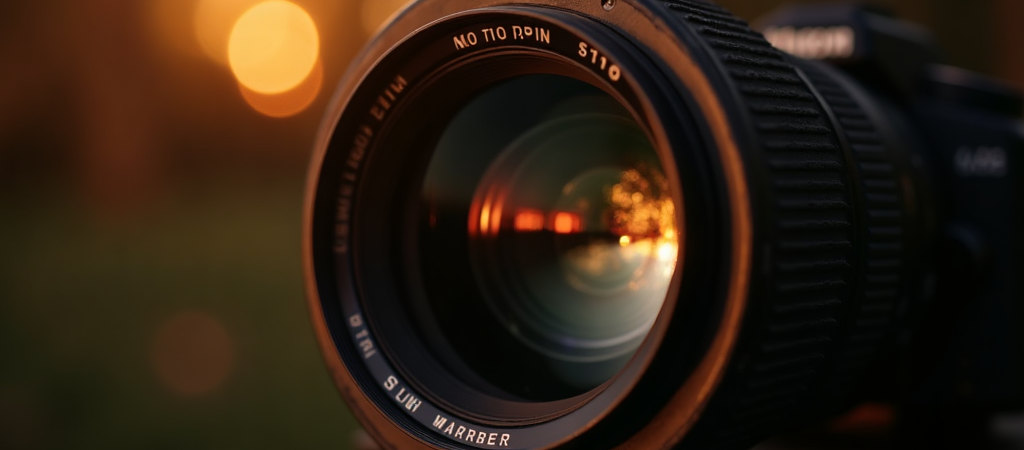
Portrait photography lives and dies by lens choice. The right lens turns a snapshot into a photograph—compression that flatters, bokeh that melts backgrounds into silk, and sharpness that renders skin texture with honesty rather than harshness.
We shot over 3,000 frames across seven different portrait lenses to find which ones actually deliver. From sub-$200 primes to professional f/1.2 glass, here’s what’s worth your money in 2026.
What Makes a Great Portrait Lens
Three things matter more than anything else: focal length, maximum aperture, and rendering character. Focal length controls compression and facial proportions—85mm is the classic sweet spot, but 50mm gives environmental context and 135mm creates dramatic compression. Maximum aperture determines background separation and low-light capability. And rendering character—the way a lens draws out-of-focus areas, handles specular highlights, and transitions from sharp to soft—is what separates a clinical lens from one with soul.
Autofocus speed matters for working photographers. Weather sealing matters if you shoot outdoors. And weight matters more than most people admit until they’re holding a rig for six hours straight.
Best Overall: Sony FE 85mm f/1.4 GM II
Sony’s second-generation 85mm GM is what happens when a company listens to every complaint about the original. The focus is faster. The weight dropped by 100g. And the optical formula delivers the kind of rendering that makes portrait photographers audibly say “wow” when they see the files.
Why It Leads
- Stunning bokeh — 11 blade aperture creates circular highlights at every stop, no onion ringing
- XA rendering — extreme aspheric element eliminates foreground bokeh fringing
- Two XD linear motors — fast, silent, accurate AF that tracks moving subjects
- 0.8m minimum focus — tight headshots without extension tubes
- Weather sealed — dust and moisture resistant for outdoor sessions
At $1,798 it’s a serious investment. But if you shoot portraits on Sony and want the best rendering available at any price, this is the lens. Check current pricing on Amazon →
Best Value: Canon RF 85mm f/2 Macro IS STM
Canon’s RF 85mm f/2 is the portrait lens that shouldn’t work as well as it does. It’s a macro lens first, portrait lens second—yet it produces images that rival lenses costing three times as much. The f/2 maximum aperture is slower than f/1.4, but the image stabilization more than compensates in low light.
The Swiss Army Portrait Lens
- 1:2 macro — fill the frame with an eye, a ring, a detail. No other portrait lens does this
- 5 stops of IS — shoot handheld at f/2 in light where f/1.4 lenses need stabilization
- Compact and light — 500g, takes 67mm filters, fits in a small bag
- STM autofocus — smooth and silent for video, quick enough for stills
- $599 retail — frequently on sale for $399
If you shoot Canon mirrorless and can only own one portrait lens, this is it. Macro capability alone makes it worth having, and the portrait rendering is genuinely beautiful. Check Canon RF 85mm f/2 on Amazon →
Best for Nikon: Nikon Z 85mm f/1.2 S
Nikon’s S-Line f/1.2 is absurd. It’s big, heavy, expensive, and produces some of the most beautiful portrait images I’ve seen from any system. If you shoot Z-mount and portraits matter to you, this lens justifies every gram and every dollar.
What Makes It Special
- f/1.2 maximum aperture — background obliteration with dreamy, creamy bokeh
- S-Line optics — multi-element design with ARNEO and Nano Crystal Coating for zero flare
- Steady AF — dual focus motor system tracks subjects with surgical precision
- Customizable control ring — assign aperture, ISO, or exposure compensation
- Build quality — weather-sealed magnesium alloy that feels like it costs what it costs
At $2,796, this is Nikon’s “no compromise” portrait lens. The weight (1,175g) means you’ll feel it after a full day of shooting. But the rendering—smooth, dimensional, with that f/1.2 depth that makes subjects pop—is worth every ounce. Check Nikon Z 85mm f/1.2 S on Amazon →
Best Budget Prime: TTArtisan 85mm f/1.8
Yes, a $99 lens on a list with $2,800 glass. And it earned its spot. TTArtisan’s 85mm f/1.8 isn’t perfect—manual focus only, no weather sealing, and some copy variation—but when you nail focus, the rendering punches way above its price class.
Budget Doesn’t Mean Bad
- f/1.8 maximum aperture — real background separation at portrait distances
- 6-element, 5-group design — simple but effective optical formula
- Manual focus — smooth, dampened focus ring that’s genuinely pleasant to use
- Clickless aperture — better for video than stills, but works for both
- Available in 7 mounts — Sony E, Fujifilm X, Nikon Z, Canon RF, Leica L, Micro 4/3, and EFM
At $99, this lens is a no-brainer for anyone starting portrait photography. You’ll learn more about focus, composition, and rendering from this manual lens than from any autofocus prime. Check TTArtisan 85mm f/1.8 on Amazon →
Best for Fujifilm: Fujinon XF 56mm f/1.2 R WR
Fujifilm’s refreshed 56mm f/1.2 brings weather resistance and faster autofocus to what was already one of the best portrait lenses on any system. On Fujifilm’s APS-C sensor, 56mm gives you an 85mm-equivalent field of view—the classic portrait focal length.
Fujifilm Portrait Perfection
- Weather resistant — shoot in rain, dust, and humidity without worry
- DC motor autofocus — faster and quieter than the original 56mm f/1.2
- Beautiful rendering — the reason Fujifilm shooters call this “the character lens”
- Compact — 445g, fits the X-T5 and X-Pro3 like it was made for them
- $999 — premium but fair for what you get
If you’re shooting Fujifilm and don’t own this lens, you’re leaving your best portraits on the table. Check Fujinon XF 56mm f/1.2 on Amazon →
Best Versatile Portrait: Sigma 85mm f/1.4 DG DN Art
Sigma’s 85mm f/1.4 DG DN Art is the portrait lens for photographers who shoot both Sony and Leica L-mount. It delivers GM-level rendering at Art-series prices—sharp wide open, beautiful bokeh, and focus performance that doesn’t hunt.
The Cross-Platform Champion
- Available for Sony E and L-mount — works on Sony, Panasonic, Leica, and Sigma bodies
- Stepping motor AF — fast, accurate, and nearly silent
- 1.4 maximum aperture — real low-light capability with smooth background rendering
- Weather sealed — brass bayonet mount, dust and splash proof
- $1,099 — significantly less than first-party f/1.4 options
Sigma has closed the gap between third-party and first-party glass. This 85mm renders beautifully, focuses reliably, and costs hundreds less than the Sony GM equivalent. The only trade-off is slightly more lateral CA at the edges, which portrait photographers will never notice. Check Sigma 85mm f/1.4 DG DN Art on Amazon →
Portrait Lens Comparison
| Lens | Price | Mount | Weight | Best For |
|---|---|---|---|---|
| Sony 85mm f/1.4 GM II | $1,798 | Sony E | 642g | Best overall rendering |
| Canon RF 85mm f/2 Macro | $599 | Canon RF | 500g | Value + macro versatility |
| Nikon Z 85mm f/1.2 S | $2,796 | Nikon Z | 1,175g | No-compromise bokeh |
| TTArtisan 85mm f/1.8 | $99 | 7 mounts | 380g | Learning and budget |
| Fujinon XF 56mm f/1.2 R WR | $999 | Fujifilm X | 445g | Fujifilm portraits |
| Sigma 85mm f/1.4 DG DN Art | $1,099 | Sony E, L | 625g | Cross-platform value |
How to Choose Your Portrait Lens
Start with your mount. Then decide what matters most—absolute rendering quality, budget, versatility, or character. The Sony GM II delivers the best overall experience. The Canon RF 85mm f/2 gives you the most for your money. And the TTArtisan proves you can shoot beautiful portraits for under $100.
Don’t overthink it. Buy a lens, shoot 500 portraits, and learn what rendering character you actually prefer. The best portrait lens is the one you use every day.
Frequently Asked Questions
Is 85mm or 50mm better for portraits?
85mm flatters facial proportions more—noses look smaller, foreheads less prominent. 50mm gives you more environmental context, which works for full-body and lifestyle portraits. Both are essential; if forced to choose, start with 85mm.
Do I need f/1.2 for portraits?
No. f/1.4 delivers nearly identical background blur at portrait distances with faster autofocus and less weight. f/1.2 matters when you’re shooting in very low light or want that extra 1/3 stop of subject isolation. Most portrait work is done between f/1.8 and f/2.8 anyway.
Can I use a zoom lens for portraits?
Absolutely. A 70-200mm f/2.8 at 85mm produces excellent portraits with the added flexibility of zoom. You lose one stop of light compared to an f/1.4 prime, but gain framing flexibility. Many working photographers carry both a prime and a zoom.
What about vintage manual focus lenses?
Vintage lenses have character that modern glass can’t replicate. Helios 44-2, Canon FD 85mm f/1.8, and Pentax Super Takumar 85mm f/1.9 all render beautifully with adapters. They’re cheap, manual, and full of personality. Just don’t expect modern autofocus speed.