
Prime vs Zoom Lenses: Which Should You Choose in 2026?
The debate is as old as photography itself — or at least as old as the first zoom lens that dared challenge the supremacy of a fixed focal length. Prime lenses offer purity. Zoom lenses offer possibility. Somewhere between those two poles lives the answer to which one belongs on your camera. And in 2026, with mirrorless systems mature, lens catalogs overflowing, and prices that range from “impulse buy” to “second mortgage,” the question deserves a deeper look than a spec sheet can provide.
This isn’t a buyer’s guide that tells you “it depends.” Everything depends. This is a guide that tells you what it depends on, why it matters, and — when you’re ready to spend — exactly which lenses earn their price tags.
At a Glance: Prime vs Zoom
| Feature | Prime Lenses | Zoom Lenses |
|---|---|---|
| Focal Length | Fixed (e.g., 50mm) | Variable (e.g., 24–70mm) |
| Maximum Aperture | Typically wider (f/1.4–f/1.8) | Narrower (f/2.8 typical for pro zooms) |
| Size & Weight | Smaller, lighter | Larger, heavier |
| Optical Quality | Generally sharper wide open | Excellent stopped down; slight wide-open softness |
| Low-Light Performance | Superior (wider aperture) | Good with f/2.8; not f/1.4 territory |
| Depth of Field Control | Dramatic, cinematic bokeh | Moderate; depends on focal length |
| Versatility | One perspective — zoom with your feet | Multiple perspectives without moving |
| Price Range | $150–$1,500+ | $400–$2,500+ |
| Best For | Portraits, low light, creative discipline | Events, travel, run-and-gun video |
What Is a Prime Lens?
A prime lens has a single, fixed focal length. No ring to twist, no range to slide through. You pick a perspective — 35mm, 50mm, 85mm — and you commit. If you want a tighter frame, you walk closer. If you want more scene, you step back. The lens doesn’t change. You do.
That constraint sounds like a limitation. It’s actually a liberation. Prime lenses strip away the temptation to stand still and zoom, forcing you to engage with distance, angle, and spatial relationships. Photographers who shoot primes develop an instinct for composition that zoom-reliant shooters never build — because they never have to.
But the real advantage is optical. With fewer glass elements, no moving zoom groups, and a single focal length to optimize for, prime lenses achieve sharpness, contrast, and aberration control that zooms still can’t match at the same price point. A $200 prime will out-resolve a $1,000 zoom in the center of the frame. That’s not opinion. That’s physics.
The Drawbacks
You need to carry multiple primes to cover different focal lengths — or accept that some shots simply aren’t yours to take. If you’re shooting a wedding with a 50mm and the couple is 40 feet away during the first dance, no amount of foot-zooming saves you. Primes demand intentionality, and sometimes intentionality isn’t enough.
What Is a Zoom Lens?
A zoom lens covers a range of focal lengths in a single barrel. Twist the ring, and 24mm becomes 35mm becomes 50mm becomes 70mm — all without taking the lens off the camera. The convenience is undeniable. One lens can replace three primes, and for working professionals who can’t afford to miss a moment, that flexibility isn’t optional. It’s the job.
Modern zooms — particularly the f/2.8 trinity lenses (16–35mm, 24–70mm, 70–200mm) — have closed the optical gap considerably. The best zooms in 2026 are genuinely excellent. You won’t see the difference on a web gallery or an Instagram crop. Where the gap remains is in maximum aperture, size, and that last few percent of pixel-level sharpness that only pixel peepers and large-format printers care about.
The Drawbacks
Weight. Cost. Complexity. A 24–70mm f/2.8 GM II is lighter than its predecessor, but it’s still a brick compared to a nifty fifty. And that f/2.8 aperture, while impressive for a zoom, is two full stops darker than f/1.4. In a dim reception hall, that’s the difference between ISO 3200 and ISO 12800. The zoom gives you reach. The prime gives you light.
Prime vs Zoom: The Real Question
Forget the spec sheets for a moment. The real question isn’t which lens type is “better” — it’s which one serves the way you shoot. Are you methodical? Do you walk a scene, find the frame, then raise the camera? Prime. Are you reactive? Do you need to reframing on the fly, catching fleeting expressions and changing perspectives without breaking stride? Zoom.
Most photographers eventually own both. The debate isn’t an either/or — it’s a question of what goes on the camera first, and which lens earns a permanent spot in the bag versus which one stays home because it’s too heavy to carry “just in case.”
What follows are six lenses — three primes, three zooms — that represent the best of their respective philosophies in 2026. Each one has earned its place through optical performance, build quality, and real-world usability. We’ve tested them in the streets, in the studio, and in the kind of awful lighting that separates great glass from merely good.
Sony FE 50mm f/1.8
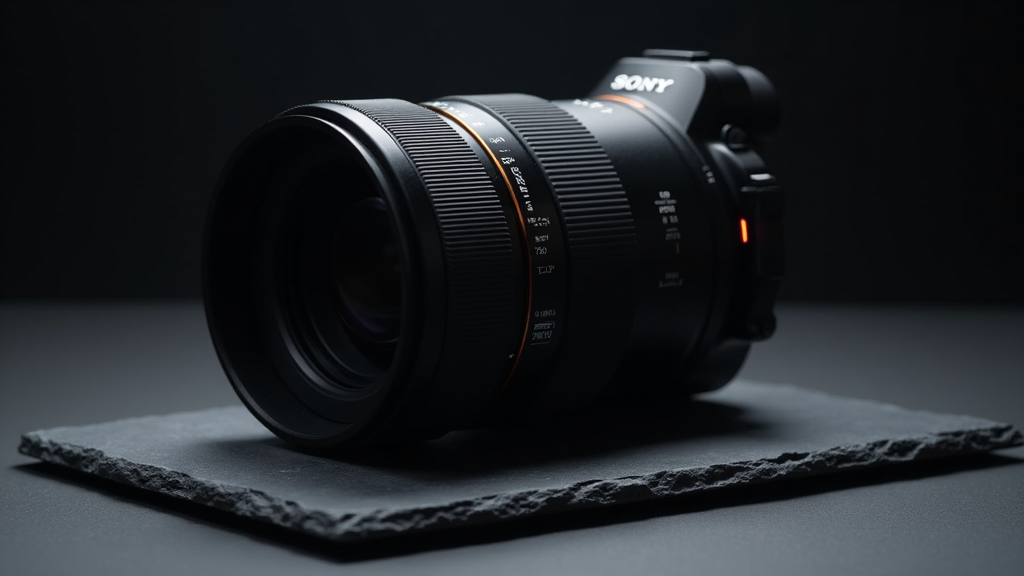
Mount: Sony E | Focal Length: 50mm | Max Aperture: f/1.8 | Weight: 186g | Filter Thread: 49mm | Price: ~$198
The Sony FE 50mm f/1.8 is the lens that shouldn’t work as well as it does. At under $200, it has no business producing images with this much character. The bokeh is creamy in a way that lenses three times its price struggle to replicate. The f/1.8 aperture opens up a world of low-light shooting that kit zooms can’t touch. And at 186 grams, it’s a lens you forget is on the camera — which is exactly how a 50mm should feel.
It’s not without sin. The autofocus motor is an older DC type, not the lightning-fast linear drives in Sony’s newer lenses. In good light, it’s fine. In dim interiors, it can hunt — and the sound it makes while doing so is a mechanical grinding that reminds you exactly how little you paid. The plastic build won’t inspire confidence if you’re used to G Master glass, and the focusing ring is smooth but imprecise for manual work. Corner sharpness wide open is merely acceptable, though it cleans up nicely by f/2.8.
But here’s the thing: none of those complaints matter when you see what this lens produces. Portraits have a natural, unforced quality. Street scenes have depth and separation. And because it’s cheap enough to keep in the bag as a “why not” lens, it ends up being the one you reach for more often than you’d expect. For Sony shooters who don’t own a 50mm yet, this is the gateway drug. Buy it, learn what a fast prime can do, and then decide if you need the GM version. Spoiler: for most people, this is enough.
Buy Sony FE 50mm f/1.8 on Amazon →
Canon RF 50mm f/1.8 STM
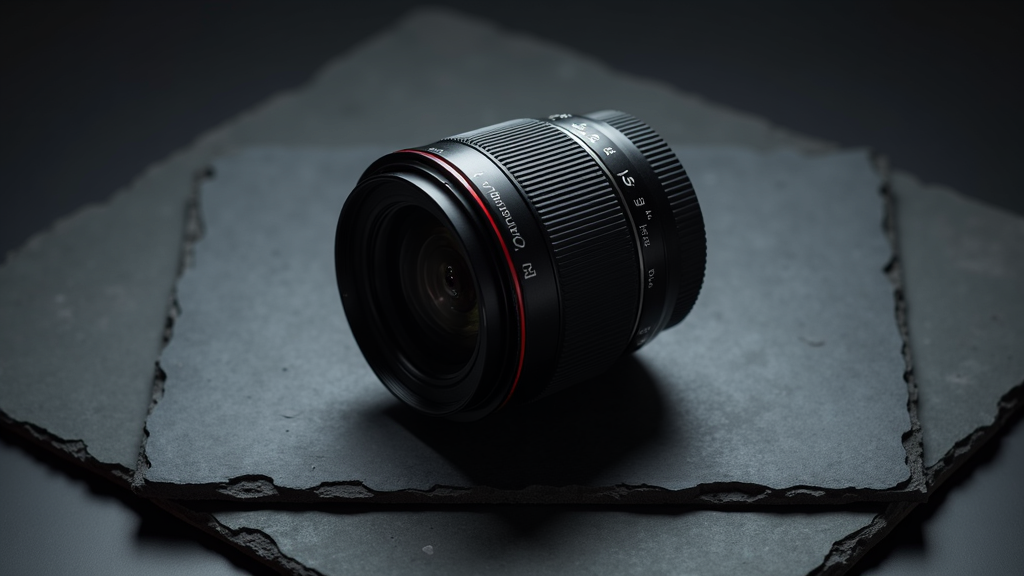
Mount: Canon RF | Focal Length: 50mm | Max Aperture: f/1.8 | Weight: 160g | Filter Thread: 43mm | Price: ~$199
Canon’s RF 50mm f/1.8 STM is what happens when a camera maker decides its nifty fifty should actually be nice. Where previous Canon 50mm f/1.8s felt like afterthoughts — cheap plastic tubes with noisy autofocus — the RF version feels considered. The STM motor is near-silent, the focus ring has actual control customization through Canon’s RF protocol, and at 160 grams, it’s one of the lightest lenses in the entire RF ecosystem.
Optically, it’s a substantial step up from the old EF 50mm f/1.8 STM. Sharpness in the center is impressive even at f/1.8, and by f/2.8 the entire frame locks into a crispness that rivals lenses costing far more. The bokeh has improved too — out-of-focus highlights are round and smooth, with less of the nervous edging that plagued the EF version. Canon clearly designed this lens for the mirrorless sensor, and it shows.
The compromises are familiar. It’s still mostly plastic. The focus ring is a fly-by-wire affair that lacks the tactile precision of a mechanical helicoid. There’s no weather sealing, so think twice before shooting in the rain. And like all 50mm f/1.8s, there’s visible vignetting and longitudinal chromatic aberration wide open — though both are easily corrected in post. But at $199, this lens is a no-brainer for any Canon RF shooter. It’s the one lens that can live on your camera permanently and never feel wrong.
Buy Canon RF 50mm f/1.8 STM on Amazon →
Sigma 35mm f/1.4 DG DN Art
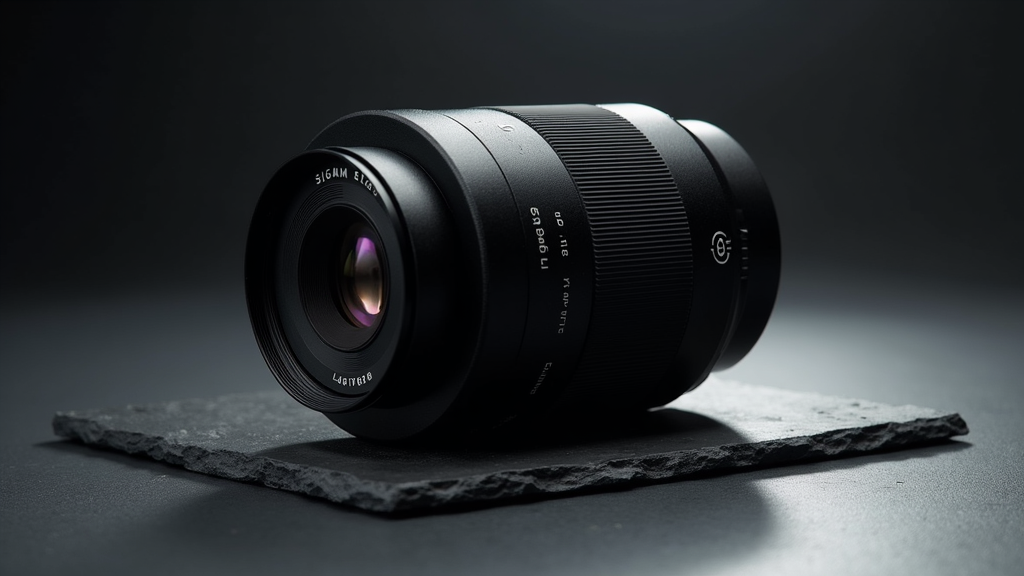
Mount: Sony E / Leica L | Focal Length: 35mm | Max Aperture: f/1.4 | Weight: 640g | Filter Thread: 67mm | Price: ~$799
The Sigma 35mm f/1.4 DG DN Art is a lens that demands your attention — not because it’s flashy, but because every image it produces has a weight and texture that cheaper 35mm lenses simply can’t replicate. This is the third generation of Sigma’s 35mm f/1.4 Art, redesigned from scratch for mirrorless, and the difference is immediately apparent. Gone is the DSLR-era bulk; in its place is a more compact, better-balanced barrel that feels like it was always meant to sit on an A7 or an S5.
Wide open at f/1.4, this lens is razor sharp in the center, with resolution that doesn’t drop off dramatically until the extreme corners. The bokeh at f/1.4 is deep, layered, and transitions smoothly from the plane of focus — a quality that makes environmental portraits feel cinematic rather than merely blurred. Chromatic aberration is extremely well controlled for an f/1.4 design, and Sigma’s Super Multi-Layer Coating keeps flare and ghosting in check even when shooting directly into harsh light.
The 640-gram weight is the price of admission for this level of optical performance. It’s not a lens you casually throw in a bag “just in case.” It’s a primary — the lens you mount when you mean business. The focus motor is a stepping drive that’s fast and near-silent for stills, though it can exhibit slight pulsing in continuous AF-C video mode. Build quality is typically Sigma Art: metal construction, tight tolerances, and a focus ring with satisfying resistance. For Sony E and L-mount shooters who take their 35mm focal length seriously, this is the one. It’s not cheap, but it’s worth every cent of that $799 asking price.
Buy Sigma 35mm f/1.4 DG DN Art on Amazon →
Sony FE 24-70mm f/2.8 GM II
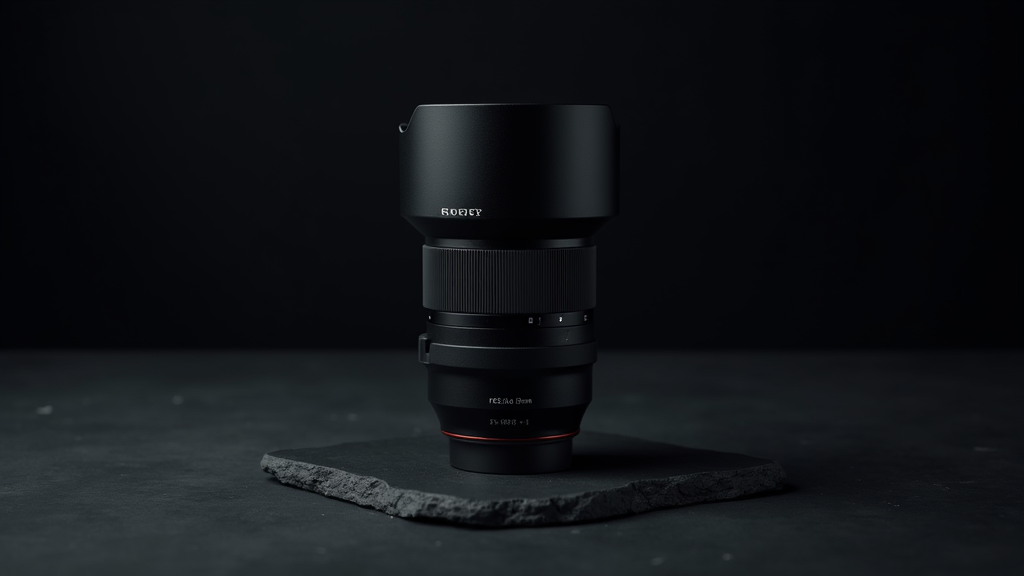
Mount: Sony E | Focal Length: 24–70mm | Max Aperture: f/2.8 | Weight: 695g | Filter Thread: 82mm | Price: ~$2,298
The original Sony 24–70mm f/2.8 GM was good. The GM II is a revelation. Sony shaved off 130 grams, shortened the barrel, improved close focus, and — somehow — made the optics significantly sharper across the entire zoom range. This is the lens that made a lot of prime shooters reconsider their life choices, because at f/2.8, the GM II resolves detail that competes with dedicated primes. Not “for a zoom.” Just competes, full stop.
The handling is where the GM II really separates itself. The focus ring, zoom ring, and new click-declick aperture ring all have distinct, satisfying tactile feedback. The zoom action is perfectly damped — smooth without being loose, firm without being stiff. Close focus has been improved to 0.3x magnification at the wide end, which means you can get semi-macro results without reaching for another lens. And the XD linear motors drive autofocus with a speed and silence that makes the original GM feel ancient.
In real-world shooting — weddings, events, editorial, travel — the 24–70mm GM II is the lens that stays on the camera from the first frame to the last. It’s wide enough for environmental scenes, tight enough for portraits, and fast enough for available light work that would’ve required a prime a generation ago. The only reason to take it off is to go wider or longer. At $2,298, it’s a serious investment, but it replaces three primes and arguably outperforms two of them. For Sony professionals, this isn’t an optional purchase. It’s the default.
Buy Sony FE 24-70mm f/2.8 GM II on Amazon →
Canon RF 24-70mm f/2.8L IS USM
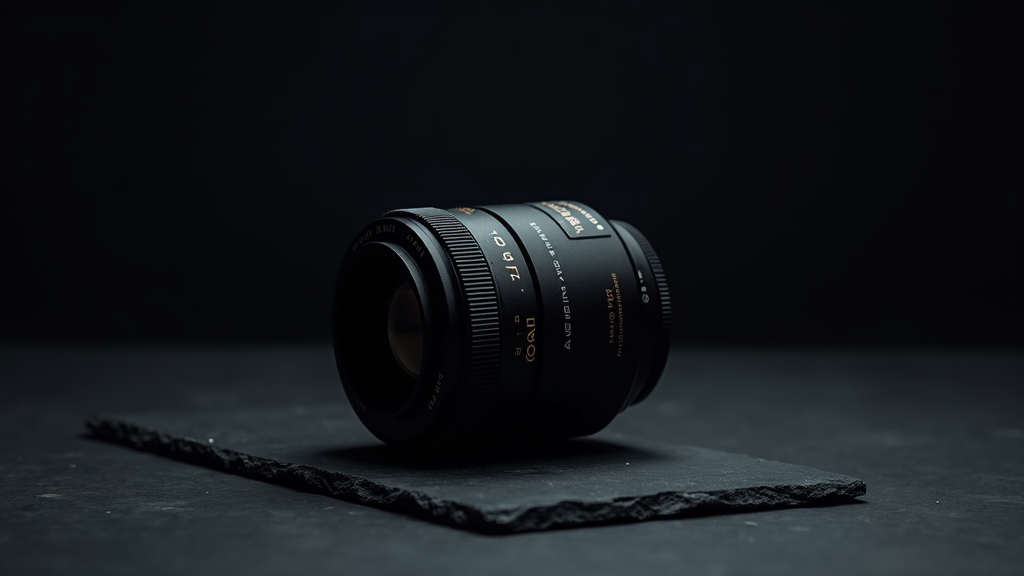
Mount: Canon RF | Focal Length: 24–70mm | Max Aperture: f/2.8 | Weight: 900g | Filter Thread: 82mm | Price: ~$2,399
Canon did something quietly radical with the RF 24–70mm f/2.8L IS USM: they added image stabilization. No other 24–70mm f/2.8 in this comparison has it. That alone makes this lens a different tool than the others — not better, but different. In-body stabilization helps, but lens-based IS combined with IBIS gives you up to 5 stops of correction, which means handheld shots at 1/4 second are not just possible but reliable. For event photographers working in dimly lit venues, that’s the difference between getting the shot and going home empty-handed.
Optically, the RF 24–70mm f/2.8L is classic Canon L-series: warm color rendering, excellent contrast, and a micro-contrast quality that gives images a three-dimensional “pop.” Sharpness is very strong across the frame at every focal length, with only the slightest softness at 70mm f/2.8 in the extreme corners — and that clears up by f/4. The Nano USM autofocus motor is fast, silent, and confident, with none of the pulsing that plagues some STM designs in video mode. This is a workhorse lens that happens to produce beautiful images.
The 900-gram weight is the trade-off. This is the heaviest lens in this comparison, and you feel it. On a compact body like the EOS R6 II, the balance is acceptable but front-heavy. On an R5 or R3, it feels more natural. The IS system adds both weight and complexity, and Canon’s pricing at $2,399 reflects the premium of that unique feature set. But if you shoot Canon RF and you need one lens to do everything — weddings, events, editorial, corporate, travel — this is that lens. The stabilization alone justifies the investment.
Buy Canon RF 24-70mm f/2.8L IS USM on Amazon →
Tamron 28-75mm f/2.8 Di III VXD
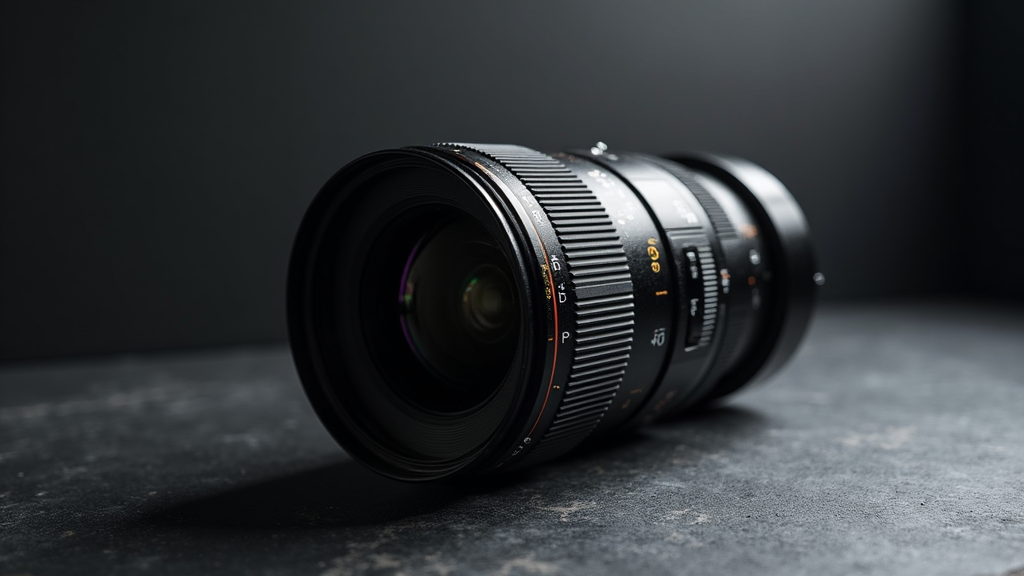
Mount: Sony E | Focal Length: 28–75mm | Max Aperture: f/2.8 | Weight: 540g | Filter Thread: 67mm | Price: ~$699
The Tamron 28–75mm f/2.8 Di III VXD is the lens that broke the price ceiling for f/2.8 standard zooms, and the VXD version — the third iteration — is the best yet. At $699, it costs roughly a third of the Sony GM II and delivers optical performance that is, in most practical shooting scenarios, indistinguishable. Let that sink in. One third of the price. Ninety-plus percent of the performance. That’s not a compromise. That’s a heist.
The VXD (Voice-coil eXtreme-torque Drive) autofocus is a genuine upgrade over the older XD motor. It’s faster, quieter, and more confident in low light. The optical redesign improves corner sharpness, reduces chromatic aberration, and adds a level of micro-contrast that was missing in the earlier version. At 540 grams, it’s the lightest lens in this entire comparison — prime or zoom. The 67mm filter thread means you can share filters with Tamron’s other E-mount lenses, saving money and bag space.
The trade-offs are real but manageable. You lose 4mm on the wide end compared to 24–70mm lenses — 28mm vs 24mm is noticeable in tight interiors and landscape compositions. The build quality is solid but not luxurious: mostly plastic with weather sealing, no aperture ring, and a zoom action that’s slightly less refined than the Sony GM II. Flare resistance is good but not in the GM’s league when shooting directly into light sources. But here’s the thing: for most photographers, these are theoretical disadvantages that rarely affect real images. The Tamron 28–75mm VXD is the lens that makes you question whether “professional” necessarily means “expensive.” In 2026, it might not.
Buy Tamron 28-75mm f/2.8 Di III VXD on Amazon →
Which Way Do You Go?
Choose a Prime If…
You value simplicity over versatility. You want the widest possible aperture for low-light shooting or creamy background separation. You prefer walking and engaging with a scene over reframing from a fixed position. You’re on a budget and want the best optical quality per dollar. You shoot primarily portraits, street, or artistic work where one focal length is enough and excess choice is a distraction.
Choose a Zoom If…
You can’t afford to miss shots because you have the wrong lens mounted. You shoot events, weddings, or documentary work where reframing speed matters more than maximum aperture. You travel light and need one lens to cover 80% of your work. You shoot video and need smooth focal length adjustments without lens swaps. You’re willing to carry more weight and spend more money for the flexibility of not having to choose.
The Honest Answer
Most serious photographers end up with both. A 50mm prime stays in the bag for low light and portraits. A 24–70mm zoom lives on the camera for everything else. The question isn’t prime or zoom — it’s which one you buy first, and which one earns enough trust to become your default.
If you’re starting out, buy the prime first. It’ll teach you more about composition and light in six months than a zoom will in two years. Then, when you find yourself missing shots because you can’t zoom, buy the zoom — and appreciate it in a way you never would have without that prime discipline behind you.
The glass you carry shapes what you see. Choose accordingly.